
When you need funds urgently for any circumstance and your personal loan gets rejected, it becomes very frustrating. Many applicants assume that a stable and steady income with a decent bank balance can automatically guarantee approval. However, in reality, the lenders assess the numerous financial and behavioural factors before approving a loan.
You can avoid repeating the same mistakes and also enhance your chances during the next application procedure by understanding the most common personal loan rejection reasons. However, the good news is that many loan rejections are fixable if you know what the lenders look for when assessing your background.
This blog is a guide that explains to the readers why personal loans get rejected in India and what are the practical steps that you can take before applying again.
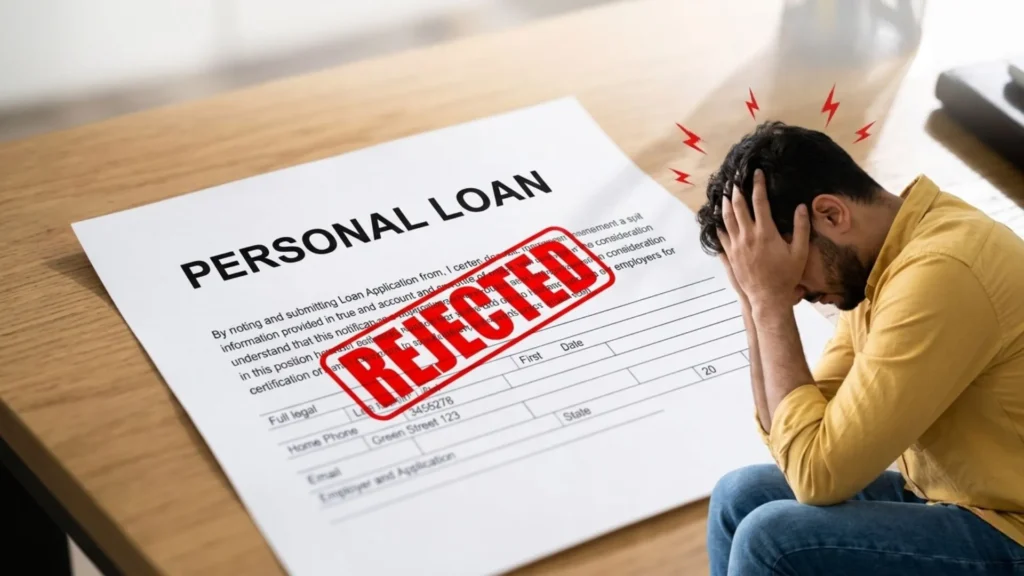
Why Banks Reject Personal Loan Applications?
Another name for unsecured loans is personal loans. The lenders here do not have any collateral to recover the money if the borrower is unable to pay the money, unlike the car or home loans. Due to this reason, the banks and NBFCs follow a stricter risk assessment process.
They evaluate:
- Credit history
- Income stability
- Existing debt
- Repayment behavior
- Employment profile
Even one weak area can affect approval chances.
Common Personal Loan Rejection Reasons
1. Low Credit Score
One of the biggest personal loan rejection reasons is a poor credit score.
Most lenders in India prefer a CIBIL score above 750. A low score indicates:
- Missed EMI payments
- Credit card defaults
- Excessive borrowing
- Financial instability
If your score is too low, lenders may see you as a high-risk borrower.
Can You Get a Loan With a Low Score?
Getting a low CIBIL score loan is possible, but:
- Interest rates may be significantly higher
- Loan amount may be lower
- Approval conditions may be stricter
Some NBFCs and fintech lenders are more flexible than traditional banks, but repayment history still matters heavily.
2. High Existing Debt
Lenders calculate your debt-to-income ratio before approving loans.
If a major portion of your income already goes toward:
- Existing EMIs
- Credit card bills
- Other loans
then banks may reject your application because they doubt your repayment capacity.
Most lenders prefer total EMI obligations to stay below 40% to 50% of monthly income.
3. Too Many Loan Applications
Applying to multiple lenders within a short period can hurt your profile.
Every loan application creates a hard inquiry on your credit report. Multiple inquiries suggest:
- Credit hunger
- Financial stress
- Desperation for borrowing
This becomes another major factor behind personal loan rejection reasons.
4. Unstable Employment History
Banks prefer applicants with stable jobs and predictable income.
Frequent job changes, short employment duration, or inconsistent earnings can create doubts about repayment ability.
Common risk factors:
- Less than 6 months in current job
- Frequent industry switches
- Irregular freelance income without proof
Salaried employees generally receive easier approvals compared to applicants with unstable income patterns.
5. Errors in Loan Application
Simple mistakes can also lead to rejection.
Examples include:
- Incorrect PAN details
- Income mismatch
- Wrong bank statements
- Incomplete documentation
Even minor inconsistencies can trigger verification failures.
6. Poor Repayment History
Lenders closely track your past repayment behaviour.
Late payments on:
- Credit cards
- Previous loans
- Buy now, pay later accounts
can negatively impact trustworthiness.
Even a single default may remain on your credit report for years.
7. Low Income Compared to Loan Amount
Sometimes the issue is not your profile but the amount requested.
If your income does not justify the loan size, lenders may reject the application even if your credit score is good.
Banks assess whether:
- EMI fits your salary structure
- You can manage expenses after repayment
- Your income supports long-term stability
8. Employer or Industry Risk
Some lenders classify certain industries or employers as high risk.
This may include:
- Startups with unstable operations
- Seasonal businesses
- Companies with irregular salary cycles
Even strong applicants may face rejection due to employer risk profiles.
How to Improve Loan Eligibility Before Applying Again?
Understanding how to improve loan eligibility is crucial before reapplying.
1. Improve Your Credit Score
This should be your priority.
Practical steps:
- Pay EMIs and credit card bills on time
- Reduce credit utilisation below 30%
- Avoid unnecessary borrowing
- Correct errors in credit reports
Consistent financial discipline can improve scores gradually.
2. Decrease Current Debts
If you have smaller loans or credit card balances still due, try to repay them before re-applying for another. When your debt decreases, it:
• Lowers your Debt-to-Income Ratio
• Strengthens the perception of your ability to repay
• Gives lenders a higher level of confidence
3. Refrain from Applying Widely
Do not apply to lenders randomly. Review their eligibility requirements thoroughly before selecting. Multiple inquiries decrease the likelihood of approval.
4. Preserve Employment Status
Avoid changing jobs immediately before you decide to apply for another loan, if possible. A consistent employment status gives lenders increased confidence.
5. Apply for a Realistic Loan Amount
Borrow only what your income can comfortably support.
Requesting smaller amounts improves approval probability and reduces lender risk perception.
6. Add a Co-Applicant
Adding a financially stable co-applicant may strengthen your application.
This works especially well if:
- Your income is moderate
- Your credit history is limited
- Your repayment capacity needs support
7. Keep Documents Accurate
Double check:
- Salary slips
- Bank statements
- PAN and Aadhaar details
- Employment information
Clean documentation improves verification speed and reduces rejection risk.
Personal Loan Tips India Borrowers Often Ignore
Many borrowers focus only on approval speed and ignore long-term financial planning.
Important personal loan tips India applicants should remember:
- Borrow only when necessary
- Compare interest rates carefully
- Read processing fee details
- Understand foreclosure charges
- Avoid borrowing beyond repayment capacity
Financial discipline matters more than quick approval.
Should You Reapply Immediately After Rejection?
No. Reapplying immediately without fixing the problem usually leads to another rejection.
Instead:
- Identify the rejection reason
- Improve weak financial areas
- Wait for the credit profile improvement
- Apply strategically
It also increases the chance of approval to a great extent.
Final thoughts
The rejection of your personal loan application is not the end of the world in most of the cases. In reality, it just means that lenders have noticed risk factors present in your profile and have decided to avoid approving it.
You need to understand the true personal loan rejection reasons to tackle the issues that are leading to your rejection. Be it a weak repayment track record, high debt levels, or a CIBIL score loan problem, all these situations can be addressed in a few months with discipline.
It’s important not just to get the loan approved but to ensure that you are capable of repayment when the loan is approved. Strengthening your profile will surely lead to future approvals with better terms and conditions.
Frequently asked questions:
1. When should I reapply for a personal loan?
It’s advisable to wait between 3 and 6 months and strengthen your profile as well as minimise risks before re-applying.
2. Does my rejected loan affect my credit score?
Your rejected loan application has a minor impact on your credit score, as hard inquiries will be made each time.
3. Are the CIBIL scores required by banks for approval?
Not really. Different lenders look for different criteria, but most are comfortable with CIBIL scores over 750.
4. Do self-employed people have higher rejection rates?
The unpredictable nature of income and cash flow might lead lenders to be stricter with self-employed individuals.
5. Is it possible to get a personal loan approval without a salary increase?
Reducing debt, a stronger repayment track record, and a better CIBIL score will significantly enhance your loan eligibility.