
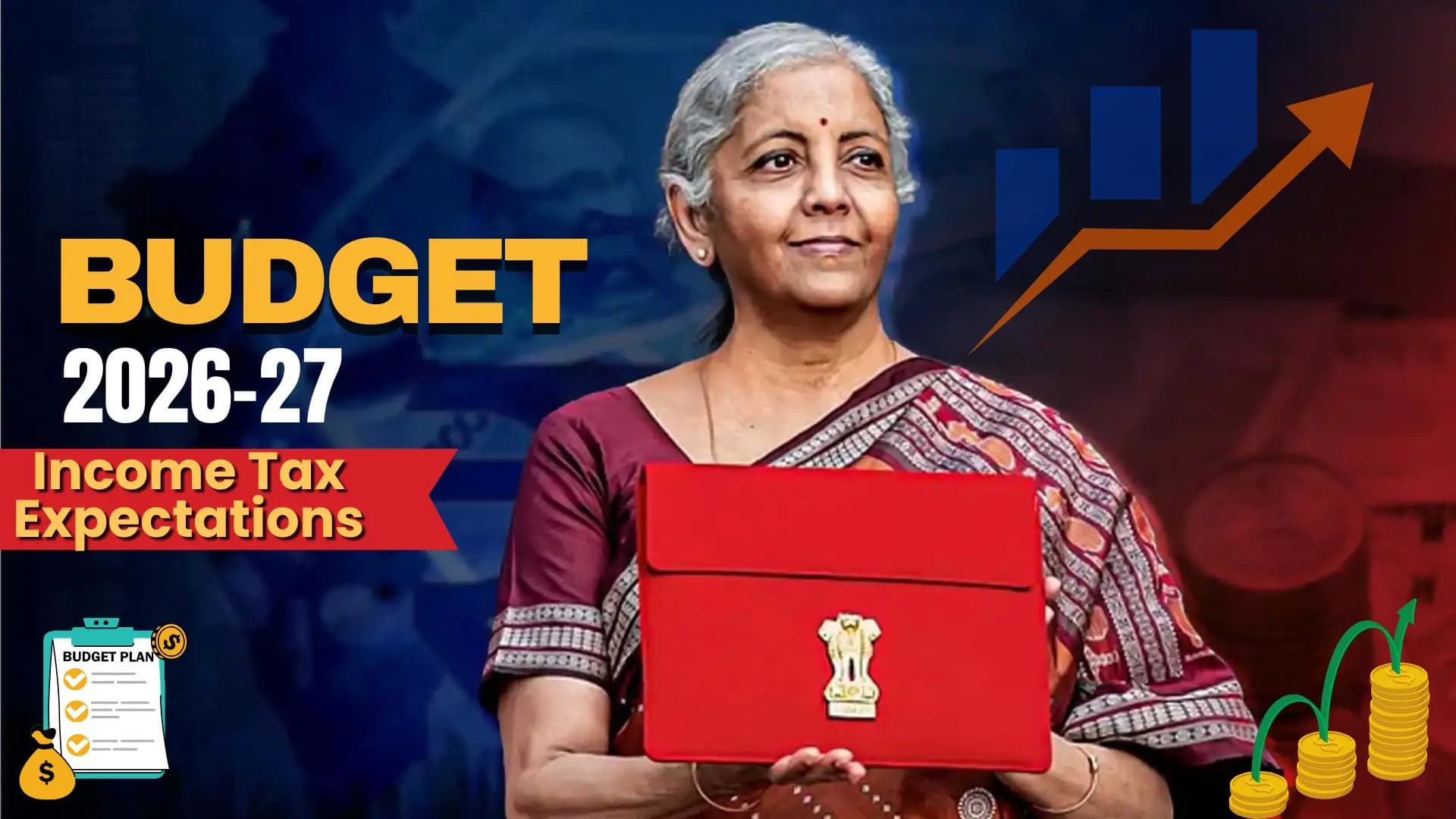
There has been a wait by taxpayers, particularly, the middle-income earners in the salaried bracket, as India gears up to the Union Budget 2026-27, in case of any change in income tax legislation. Right on the heels of substantial income tax relief that will occur in 2025 after Budget 2025, it is anticipated that the government may well perfect the tax regimes to increase the amount of disposable income, ease up compliance and increase economic growth.
This paper has given a detailed argument on expectations on income tax in 2026, with projections on the tax slabs, the future of new or old tax regimes, future expectations regarding demand by taxpayers, and projections on the impact of these changes to individuals and homeowners.
A Snapshot: What Happened in Budget 2025
To go deep into the future expectations of 2026, it is important to first know the context of the dramatic changes of the past year:
Salaried Taxpayer Revolvers Relief.
- One of the provisions of the new tax system caught headlines with zero income tax on the people with the annual income of not more than 12 lakh brought as one of the provisions in Budget 2025.
- Final tax free limit was increased to 12.75 lakh using standard deduction of 75,000 of the salary received by the salaried employees.
- The new government restructured taxation schedule by raising exemption and lowering marginal tax rate in the various income brackets.
The reforms significantly reduced tax on middle class to boost house holds consumption, savings and investment which are the key avenues to domestic economic activity.
Inside the New vs. Old Tax Regimes (Pre-2026)
New Tax Regime (Post-Budget 2025)
| Income Range (₹) | Tax Rate (%) |
| Up to ₹4,00,000 | Nil |
| ₹4,00,001 – ₹8,00,000 | 5% |
| ₹8,00,001 – ₹12,00,000 | 10% |
| ₹12,00,001 – ₹16,00,000 | 15% |
| ₹16,00,001 – ₹20,00,000 | 20% |
| ₹20,00,001 – ₹24,00,000 | 25% |
| Above ₹24,00,000 | 30% |
This simplified framework provides zero tax up to ₹12 lakh after rebates and standard deductions, making it especially attractive for salaried taxpayers.
Old Tax Regime (Unchanged Basics)
Under the old regime, traditional slab rates remain:
| Income Range (₹) | Tax Rate (%) |
| Up to ₹2,50,000 | Nil |
| ₹2,50,001 – ₹5,00,000 | 5% |
| ₹5,00,001 – ₹10,00,000 | 20% |
| Above ₹10,00,000 | 30% |
There are several exemptions and deductions that are available under this regime (e.g. 80C investments, HRA, home loan interest) but on the balance in the majority of cases this regime leads to an increased tax burden unless deductions are optimally made.
Best Taxpayer anticipations before Budget 2026.
As the Budget 2026 planning continues to gain momentum, in relation to content proposed by taxpayers and tax professionals, it is suggested that they should anticipate several areas of reform or relief:
1. Increase in min Basic exemption and Rebate.
Although expensive steps were taken in the context of Budget 2025, according to which the revenue is up to 12 lakh tax-free, it is expected to increase further:
- It is being demanded to increase the basic exemption limit (which is 4 lakh at the present regime of the new regime) to 5 lakh or more.
- Some taxpayers would also prefer increased Section 87A rebates to incomes past 15 lakh for the top-middle incomes to enjoy zero taxation.
Not only would these changes address the increased disposable incomes but it may also make the tax planning of more parts of the labor force easy.
2. Altering the Highest Tax Bracket
The industry associations such as PHDCCI have also suggested that the 30% tax bracket in the new system should start at a high level (say, more than 50 lakh) and that high-income professionals should not be taxed so heavily.
These changes may aid in retaining the best employees, create an incentive to invest, and stay competitive within a global tax regime.
3. The Future of the Old Tax Regime
A major question for Budget 2026 is whether the government will phase out the old tax regime entirely.
- Around 80% of taxpayers have already moved to the new regime, prompting speculation about the relevance of maintaining two parallel structures.
- While abolition seems unlikely in one fell swoop, experts anticipate continued “nudges” to make the new regime more attractive, gradually marginalising the old one.
A full phase-out may be years away, but Budget 2026 might offer signals via incentives and structural tweaks.
4. Demand for More Deductions in the New Regime
One common criticism of the current new regime is its limited deduction options. Taxpayers are seeking:
- Allowance of key deductions like Section 80C, 80D, and home loan interest even under the new regime.
- Rationalised surcharge rates and reduced cess burdens to further lower tax payable.
Incorporating popular deductions without negating the regime’s simplicity could be a game-changer in tax planning.
5. Simplification of Compliance and ITR Filing
Beyond slabs and rates, clarity and ease of income tax return (ITR) filing remain priorities. Desired changes include:
- More accurate pre-filled form data to reduce errors and notices.
- Faster processing and refunds, especially for salaried employees.
- Improved digital tools and calculators to compare regimes.
Such administrative reforms can significantly reduce compliance costs and taxpayer frustration.
Real-World Implications
Case Study: Salaried Middle Class (₹10–18 lakh income)
Consider an employee earning ₹15 lakh annually:
Under the New Regime:
- Tax computed based on revised slabs with standard deduction and partial rebates — significantly lower than old regime liability.
Under the Old Regime:
- Higher tax due to less favourable slabs unless subject to maximised exemptions.
This real-world example illustrates why most middle-income taxpayers are now leaning towards the new regime.
The Broader Economic Rationale
From a policy perspective, tax relief coupled with simplified structures is expected to:
- Boost consumption by increasing take-home pay.
- Encourage investment by freeing disposable income.
- Drive compliance, as simpler systems reduce loopholes and complexity.
- Support GDP growth, especially in consumer-driven sectors.
The government’s balancing act in Budget 2026 will be to stimulate growth without compromising fiscal prudence.
Conclusion: What to Expect on February 1, 2026
Budget 2026 is going to be followed by the tax reduction policies of the previous year that have been revolutionary. Key expectations include:
- exemption should be increased further by way of exemption limits and rebates.
- there is a possibility that tax brackets of the high income groups can be raised.
- Tax regime or better tax deductions under the new tax regime.
- Additional optimization of tax filing and compliance.
- Old tax regime critical outwit strategy prospect.
The true extent of the reforms will not be apparent until the interval of the Budget, yet, taxpayers should anticipate another series of major changes in the field of income taxes, which would enhance the amount of disposable income and simplify the process of taxes.
Boost your business with Go Finance—get fast, flexible finance and business loans designed for your growth.
We provide all types of finance and loan solutions with easy approval and reliable support.