
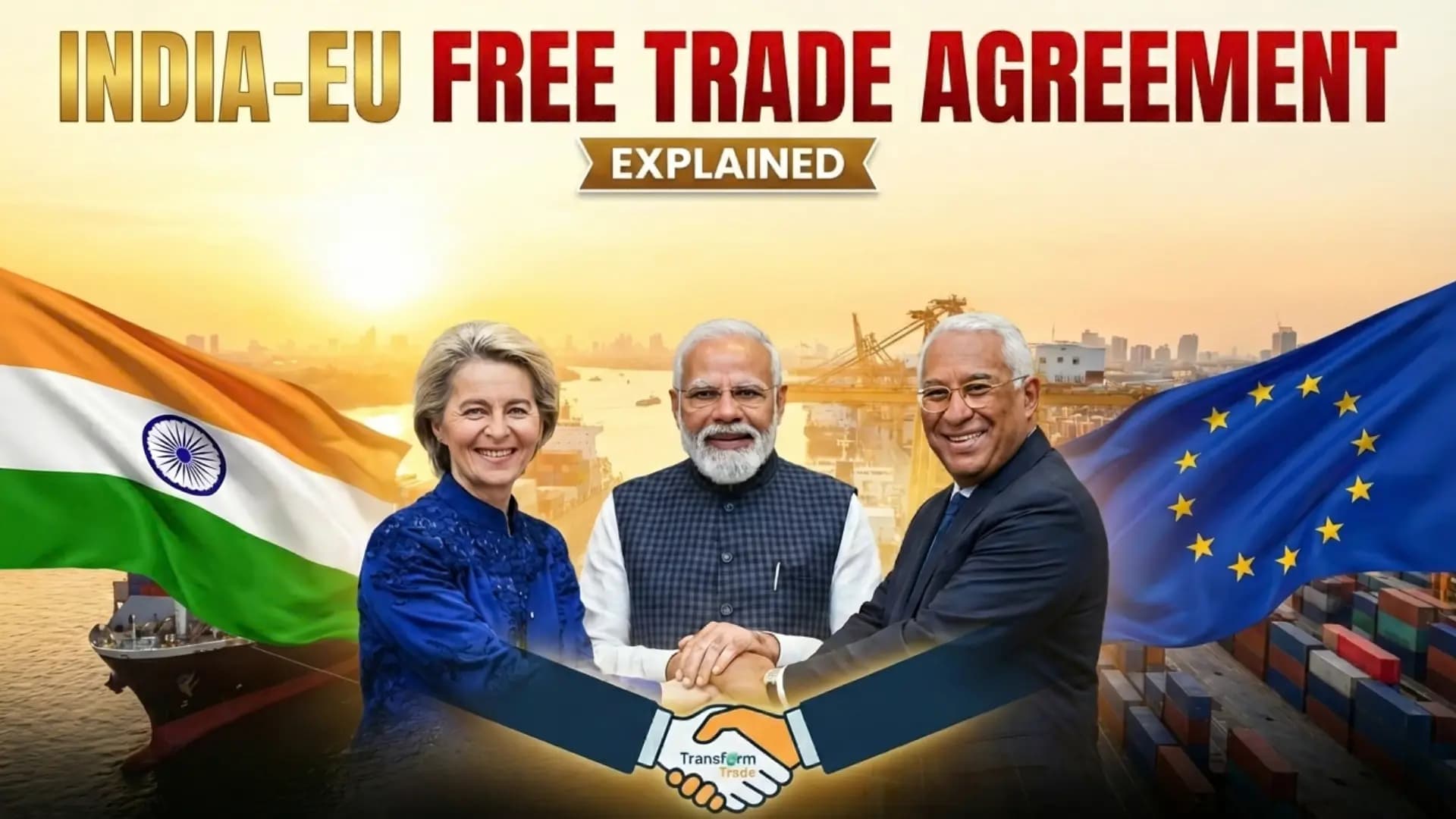
India EU Free Trade Agreement (FTA) or the Broad-based Trade and Investment Agreement (BTIA), is believed to be among the most radical economic pacts in the contemporary trade history of India. The agreement is inclusive of trade in goods, services, investment, digital commerce, sustainability and financial services, where India is connected with a 27 country European market exceeding 450 million consumers.
This FTA will alter prices, patterns of employment, competitiveness in exports, capital flows as well as long-term development of an economy once in effect. The before and after impact is crucial knowledge to businesses, consumers, exporters, and financial institutions.
Trade and Economy: Before vs After the India–EU FTA
Prior to the agreement, trade between India and the EU is voluminous yet constrained with high tariffs, difficult regulations, restricted access to the market and barriers of the visa. These culminate into high expenses and low competitiveness.
Following the FTA, lower tariffs and equal regulations are likely to boost the bilateral trade volumes, enhance efficiency of supply chains, and boost the position of India in the world trade networks.
Economy-Wide Impact
| Aspect | Before FTA | After FTA |
| Bilateral Trade Growth | Slower due to tariffs | Faster expansion |
| Export Competitiveness | Limited by duties | Strong global positioning |
| Foreign Investment | Moderate inflows | Higher long-term FDI |
| Manufacturing Growth | Domestic-focused | Export-driven |
| Cost of Capital | Higher | Lower due to EU investment |
Commodity Prices and Consumer Goods: Before vs After
Price cuts on imported goods within Europe will be among one of the most noticeable effects of the FTA. The expensive cost of European products in India is attributed to high import duties at the moment.
Imported Goods Pricing Impact (Indicative)
| Commodity/Product | Price Before FTA | Price After FTA (Estimated) | Impact on Consumers |
| European Cars | ₹45–50 lakh | ₹35–40 lakh | Affordable luxury |
| Wine & Spirits | ₹3,000 | ₹1,800–2,000 | Higher consumption |
| Cheese & Dairy | ₹1,000/kg | ₹700–800/kg | More choices |
| Medical Devices | ₹1,00,000 | ₹80,000–85,000 | Lower healthcare costs |
| Industrial Machinery | High import cost | Reduced capital cost | Cheaper production |
Lower prices will benefit consumers but will also increase competition for domestic manufacturers, requiring productivity upgrades.
Impact on Indian Exports: Before vs After
Before the FTA, Indian exporters face tariffs, compliance hurdles, and certification barriers in Europe. After the agreement, easier access is expected.
| Sector | Before FTA | After FTA |
| IT Services | Visa restrictions | Increased mobility |
| Pharmaceuticals | Regulatory delays | Faster approvals |
| Textiles & Apparel | Tariffs & quotas | Price competitiveness |
| Engineering Goods | Certification barriers | Easier EU access |
Export growth will directly boost revenue, foreign exchange earnings, and industrial output.
Employment and Jobs: Before vs After
The FTA is expected to significantly impact employment patterns.
Before the agreement, job growth is largely domestic-market driven. After implementation, export-oriented industries will expand, creating new employment opportunities.
Job Impact Overview
| Area | Before FTA | After FTA |
| IT & Software Jobs | Limited EU access | Higher overseas demand |
| Manufacturing Jobs | Domestic focus | Export-led hiring |
| Logistics & Ports | Moderate activity | Increased trade volume |
| Banking & Finance | Local operations | Global exposure |
| MSME Employment | Restricted growth | Expanded export opportunities |
Overall, job creation is expected to be net positive, particularly in skilled and semi-skilled sectors.
Banking, Finance, and Credit Availability: Before vs After
Prior to the FTA, India has restricted accessibility in its financial markets to the foreign banks. Business capitalization is still relatively expensive.
Following the agreement, a higher involvement of European banks and investors will:
- Improve liquidity
- Reduce borrowing costs
- Expand trade finance
- Intensify risk management apparatus.
| Financial Aspect | Before FTA | After FTA |
| Cost of Business Loans | Higher | Lower |
| Trade Finance Access | Limited | Expanded |
| Foreign Bank Presence | Restricted | Increased |
| MSME Credit Flow | Tight | Easier |
This change will particularly benefit exporters and growing businesses.
Who Benefits and Who Faces Challenges?
Major Benefits
- Export-oriented industries
- Consumers (lower prices)
- Banks and NBFCs
- MSMEs with global ambitions
- Skilled professionals
Potential Challenges
- Animal husbandry and agriculture industries.
- Small manufacturers
- Carbon-intensive industries
The Indian demands gradual liberalization in order to strike a balance between the growth and the protection.
Strategic and Geopolitical Impact
The FTA reinforces the new relationship between India and the EU as globalization forms alternative supply chains. It improves the reliance on one markets and enhances India as a good global trading and investment partner.
Final Conclusion
Before and after the implementation of the India-EU Free Trade Agreement, the economy of India will be transformed in terms of prices, employment, export, finance, and sustainability. The net costs involved will not be significant when done thoughtfully, while the overall benefits of the long term, which include enhanced growth, quality employment, reduced prices of goods and improved global integration are way more than the costs.
To businesses, exporters, and financial institutions, early preparations will become important in order to realize maximum experience out of this historic deal.
Get smarter with Go Finance- the business lending company you can rely on when you need a business loan, export finance or a business growth oriented financial solution with quick and dependable approvals and solutions.