
Energy wars in the energy-abundant areas will hardly stay on headlines of political news they will spread to the global financial markets rather soon. The recent tensions in West Asia have again proved the manner in which closely interlinked the field of geopolitics and world economy, have become. When the tension escalated in the area, the prices of crude oil shot on a high angle, and the stock market and foreign exchange markets around the globe became volatile.
A report that was released by The Hindu indicated that the conflict has interrupted the investors and cast their concerns on the possible disruptions of oil supply channels across the world markets. Since West Asia has a strategic contribution to the world energy output, any unrest in the area is likely to push the oil prices upwards, affect the inflation rates, and the performance of financial markets in the global economic arena.
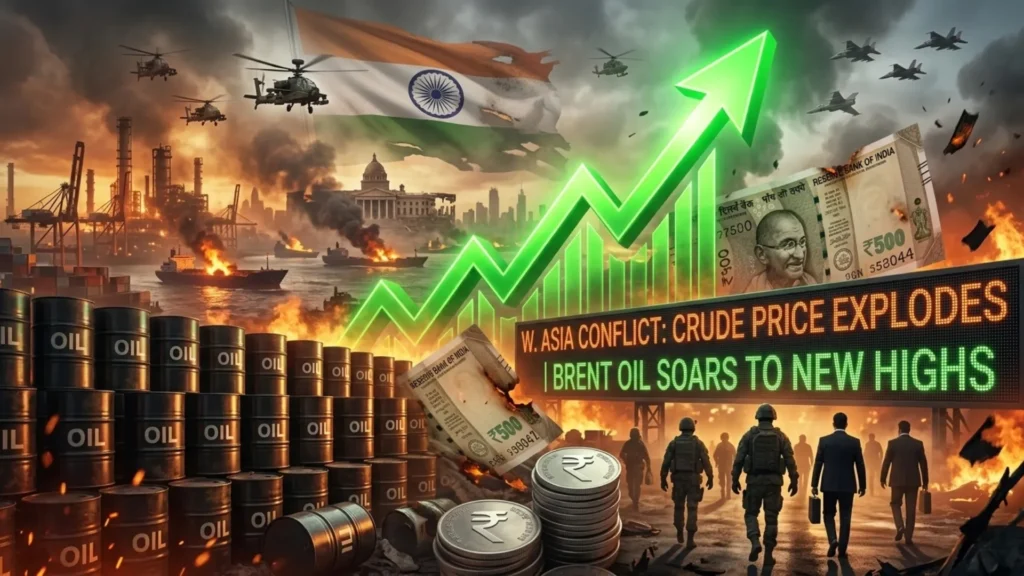
The West Asia Conflict is contributing to Crude Oil Price Surge.
Geopolitical risks in oil markets are also direct responses especially when the regions that are oil producing are involved. West Asia has a large proportion of oil being exported into the rest of the world and major oil shipping routes like the Strait of Hormuz play a vital role in the transportation of the crude product to the rest of the world markets.
Traders expect the shortage of supply when the conflicts threaten these channels or destroy power infrastructure. This makes them to start purchasing oil futures when the price is high causing the crude oil benchmarks to rise. After the latest increase, oil prices in the world market have soared sharply as markets have discounted the risk of possible disruption of supply.
The threats of the attacks on oil plants, tanker vessels, or pipelines can be even possible to induce market panic. This effect is commonly known by analysts as the geopolitical risk premium whereby oil prices go up not just due to actual losses in supply but due to a perception that the supply can be thwarted.
These price changes have immediate economic impacts on the energy-importing countries, including India, Japan, and South Korea. These economies rely much on imported crude oil and any continuous rise in the world prices would greatly increase the cost of fuel and import bills.
How Stock Markets React to Rising Oil Prices
Geopolitical tensions and energy price shocks normally have a rapid reaction in stock markets. With the skyrocketing oil prices, investors are apprehensive of the world economy and profitability of companies.
Crude oil is more expensive and it raises operation expenses of most business sectors especially the aviation sector, logistics, manufacturing and transportation. An example is airlines that allocate a huge percentage of their operating budgets on fuel. There is also a great risk of falling profits of the airline companies when the price of oil soars, unless the companies increase the price of the tickets.
On the same note, manufacturing industries that have a large contribution of transportation and energy could also incur an increased cost of production. These pressures mostly cause falls in the stock value of industries in which the cost of fuel is a major concern.
Meanwhile, the oil companies have an opportunity to experience increased price of oil. Increasing the crude prices can lead to increased revenues by the oil and gas producers and hence improve their stock values. Consequently, in some cases, the energy sector stocks outperform the rest of the market in times of surging oil prices.
Nevertheless, the general mood on the market generally is risk averse in times of geopolitical crisis. When investor fear sets in, they tend to shift their money to the less risky government bonds or gold, which triggers short-term falls in the equity markets.
Effect on the Global Currency and Forex Markets.
Foreign exchange markets have also been affected by the conflict between West Asia. The prices of commodities, balance in trade, and investor sentiment are all very closely associated with currency values.
Oil exporting nations tend to experience a rise in the price of crude oil as they receive more profits in terms of export revenues. This would be able to hedge their currencies against others. Conversely, their trade deficits increase and the currencies of the oily dependent countries can be devalued.
A rise in the U.S. dollar is common when the geopolitical environment is not sure since it is perceived to be a safe-haven currency by investors. As the world becomes tense, a great number of investors transfer their money to the dollar-based assets like the U.S Treasury bonds.
In the case of India where more than 80 percent of its oil needs are imported, an increase in oil prices may pressure the rupee. Increased import bills result in high demand of foreign currency, and these may help in depreciation of the domestic currency.
The Inflation Risk: Why Oil Prices Matter for Everyday Consumers
Oil prices influence much more than just fuel costs. Because petroleum products are widely used across industries, higher crude prices can trigger broader inflationary pressures in the economy.
Transportation costs rise when fuel becomes more expensive, which increases the cost of moving goods across supply chains. Businesses often pass these higher costs on to consumers in the form of increased prices for products and services.
For example, food prices may rise if transportation costs increase for agricultural products. Similarly, manufacturing costs for plastics, chemicals, and packaging materials often rise when petroleum-based inputs become more expensive.
Central banks must carefully monitor these developments. If inflation accelerates due to higher energy prices, policymakers may be forced to adjust interest rates or monetary policy to maintain price stability.
What the West Asia Crisis Means for India’s Economy
India is particularly sensitive to global oil price fluctuations because of its heavy reliance on imported energy. Rising crude prices increase the country’s import bill, widen the current account deficit, and put upward pressure on inflation.
Higher fuel costs also affect household budgets. When petrol and diesel prices increase, transportation and logistics costs rise, which can push up prices for everyday goods and services.
Financial markets in India often react quickly to these developments. Sectors such as aviation, paints, chemicals, and transportation are especially vulnerable to rising crude prices because fuel and petroleum derivatives represent a significant portion of their costs.
However, some segments of the economy may benefit. Domestic oil producers and energy companies may experience improved revenues if global oil prices remain elevated.
Outlook: What Investors and Policymakers Are Watching
The dynamics of the future of oil prices, and the financial markets will predominantly rely on the developments of the geopolitical scenario. In case the situation in West Asia deteriorates or even breaks key energy infrastructure, the prices of oil would increase further.
Conversely, it would be possible to initiate diplomatic talks or stabilization within the region, which would help to calm markets and decrease the geopolitical risk premium already in oil prices.
The events in the region are very keenly followed by investors, policymakers, and businesses since the stakes are much broader than the energy markets. The war puts into perspective how geopolitical developments can subsequently transform economic expectations, take a hold on world trade patterns and alter financial stability.
Conclusion
The current conflict in West Asia is an excellent reminder of the way the geopolitics and financial globalization have become so interdependent. Local crisis has the potential to create a turbulent effect on the global prices of crude oil, stock exchange and exchange rates in a very short period.
These are important dynamics as far as investors and policymakers are concerned. Increased oil prices not only impact the energy markets but also define the inflation patterns, business profitability and economic growth perspectives. The global markets being very sensitive to developments in one of the most strategic regions in the world will keep being influenced with the continued evolution in the situation.
Monitor market trends, oil prices and geopolitical developments among the world that would affect the economy. Subscribe Gofinance to the recent news in finance, market evaluation, and professional financial news.