
- 1.Why the Fuel and Fertilizer Prices Outlook Remains Elevated
- 2.Global Economic Impact: Inflation, Growth, and Banking Pressure
- 3.Impact on Food Security and Agriculture
- 4.Real-World Example: Emerging Economies Under Pressure
- 5.Key Benefits of Understanding the Fuel and Fertilizer Prices Outlook
- 6.Finance and Banking Trends Emerging from This Crisis
- 7.What Should Individuals and Businesses Do Now?
- 8.Future Outlook: How Long Will Prices Stay High?
The economic importance of fuel and fertilizer price predictions has reached its peak in 2026 according to current economic assessments. The IMF World Bank and International Energy Agency IEA conducted a joint assessment which predicts extended high global prices because of geopolitical conflicts and supply chain interruptions and essential energy production areas sustaining infrastructure destruction. The current economic situation involves more than a temporary change because it creates permanent difficulties which impact worldwide inflation rates and food security and banking systems and individual financial situations.
Why the Fuel and Fertilizer Prices Outlook Remains Elevated
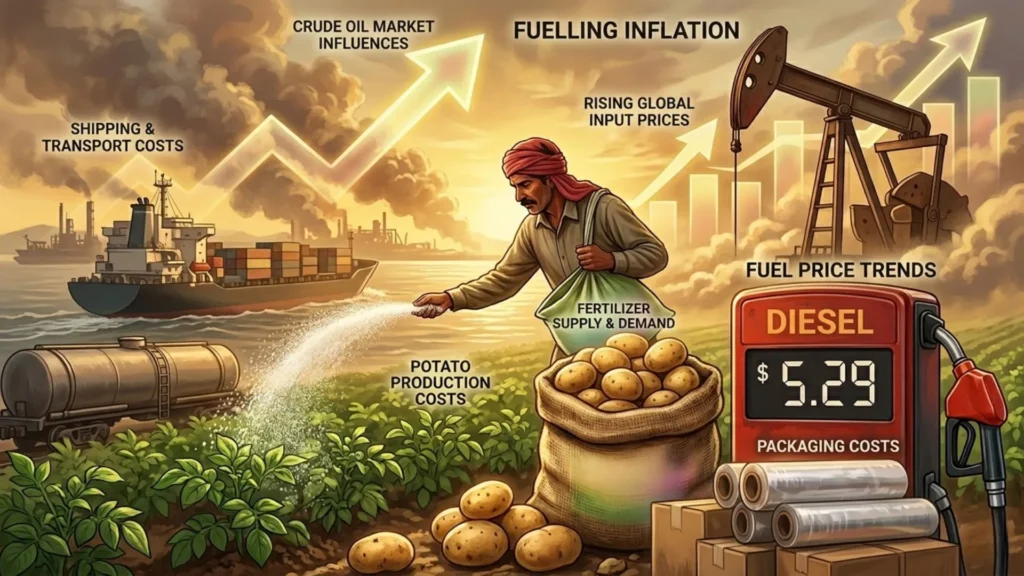
The current fuel and fertilizer prices outlook is driven by multiple interconnected global factors.
1. Supply Chain Disruptions and Infrastructure Damage
The continuous Middle East conflict has interrupted both oil and gas production operations and essential shipping routes which include the Strait of Hormuz. The supply chains require time to rebuild which will maintain high prices even after trade routes return to normal operations.
2. Reduced Global Commodity Flow
The relationship between energy markets and fertilizer markets creates a strong connection between these two markets. Fertilizer production depends heavily on natural gas, and LNG supply disruptions have resulted in higher fertilizer costs which have affected agricultural operations throughout the world.
3. Asymmetric Global Impact
The price forecasts for fuel and fertilizer create serious economic problems for low-income countries because these nations depend on energy imports and face increased costs that hinder their ability to budget for government expenses while their debt accumulation risk rises.
4. Long-Term Structural Effects
Even after stabilization, experts warn that supply recovery will lag demand, leading to sustained inflationary pressure across sectors.
Global Economic Impact: Inflation, Growth, and Banking Pressure
The prolonged fuel and fertilizer prices outlook is reshaping macroeconomic trends worldwide.
Rising Inflation
Inflation increases because of energy price shocks which serve as a major inflationary factor. Various situations have caused oil prices to exceed $100 per barrel which has led to higher expenses for transportation and manufacturing and food production.
Slower Economic Growth
The IMF and World Bank are revising global growth forecasts downward as high input costs reduce productivity and consumption.
Pressure on Central Banks
Central banks face a dilemma: raise interest rates to control inflation or support growth. This creates volatility in financial markets and affects lending rates.
Impact on Food Security and Agriculture
A critical consequence of the fuel and fertilizer prices outlook is its direct effect on global food systems.
Factor | Impact |
Fertilizer shortages | Lower crop yields |
Rising input costs | Higher food prices |
Supply chain disruptions | Food insecurity in vulnerable regions |
Fertilizer prices have already risen significantly, with some estimates suggesting a 15–20% increase in early 2026.
This creates a ripple effect:
- Higher food inflation
- Reduced agricultural output
- Increased poverty and hunger risks
Real-World Example: Emerging Economies Under Pressure
Countries such as Nigeria see the actual effects which result from current fuel and fertilizer price projections. The fuel price increase of more than 50% raised expenses for people while it undid progress which had been made to control inflation. Sub-Saharan Africa experiences reduced economic development because of two factors which include higher energy import expenses and restricted government financial resources.
Key Benefits of Understanding the Fuel and Fertilizer Prices Outlook
Understanding the fuel and fertilizer prices outlook is not just for economists—it offers practical financial advantages:
1. Better Financial Planning
Individuals can anticipate rising costs in fuel, groceries, and utilities, allowing smarter budgeting and savings strategies.
2. Smarter Investment Decisions
Investors can identify opportunities in:
- Energy stocks
- Commodity markets
- Agricultural sectors
3. Risk Management for Businesses
Businesses can hedge against price volatility and adjust supply chains proactively.
4. Strategic Banking Decisions
With interest rates likely to fluctuate, borrowers can time loans and refinancing more effectively
Finance and Banking Trends Emerging from This Crisis
The prolonged fuel and fertilizer prices outlook is accelerating key financial trends:
1. Shift Toward Sustainable Energy Financing
To lessen dependency on volatile fossil fuel markets, it is noticeable that banks and governments are increasing their investments in renewable energy sources.
2. Growth of Commodity-Linked Financial Products
Financial institutions are offering more products linked to energy and agricultural commodities.
3. Increased Focus on Food Security Financing
Development banks and global institutions are prioritizing funding for agriculture and food supply chains.
4. Digital Banking and Cost Optimization
As the operation costs are getting higher, banks are working hard on the digital transformations to remain profitable.
What Should Individuals and Businesses Do Now?
To navigate the evolving fuel and fertilizer prices outlook, consider these actionable steps:
- Diversify investments to hedge against inflation
- Reduce energy consumption where possible
- Adopt long-term financial planning strategies
- Monitor interest rate trends for loans and EMIs
- Explore sustainable alternatives in business operations
Future Outlook: How Long Will Prices Stay High?
Experts predict uncertainty about fuel and fertilizer price developments for the upcoming months. Geopolitical tensions may decline but the market will continue to experience high prices until 2027 because of ongoing supply problems and construction work delays. The global economy is entering a phase where energy and food security will define economic stability.
Conclusion
The fuel and fertilizer prices outlook will become an ongoing economic challenge which the current decade will define. Its effects create inflationary pressure which extends to the agricultural sector and banking industry and influences common financial choices.
The knowledge of these economic forces enables people and companies and investors to develop their decision-making abilities, which they need to navigate the current unpredictable worldwide economic situation.
Stay ahead of rising costs and economic shifts—explore smarter financial strategies with GoFinance today and take control of your future before the market does.