
- 1.Why Crude Oil Prices Matter for India
- 2.How Rising Crude Oil Prices Drive Inflation
- 3.Current Account Deficit (CAD): The Hidden Risk
- 4.Impact on Banking & Financial Sector
- 5.Real-World Example: Geopolitical Tensions
- 6.Long-Term Economic Implications
- 7.Key Takeaways Table
- 8.Benefits of Understanding This Trend
- 9.What Can India Do?
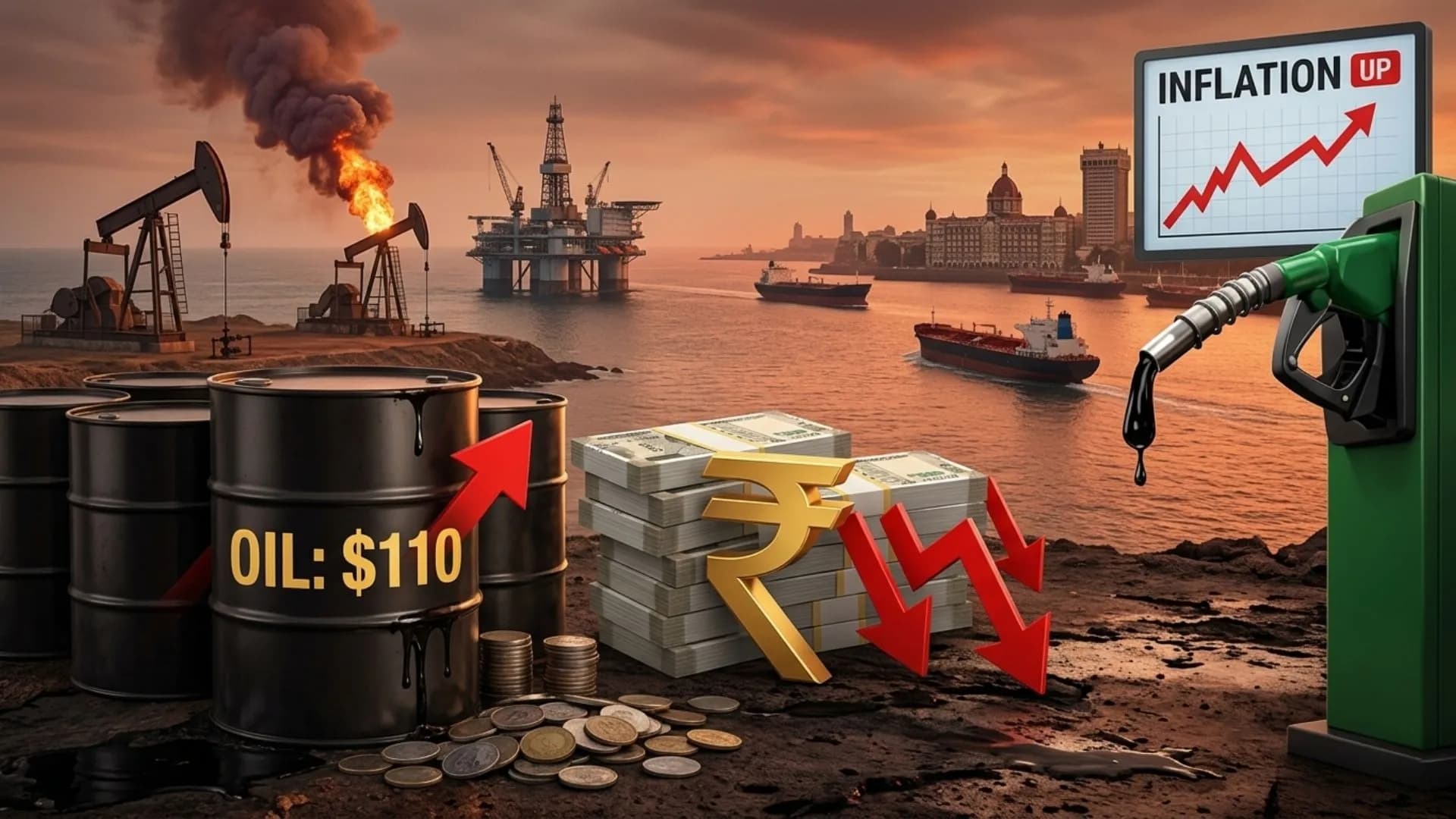
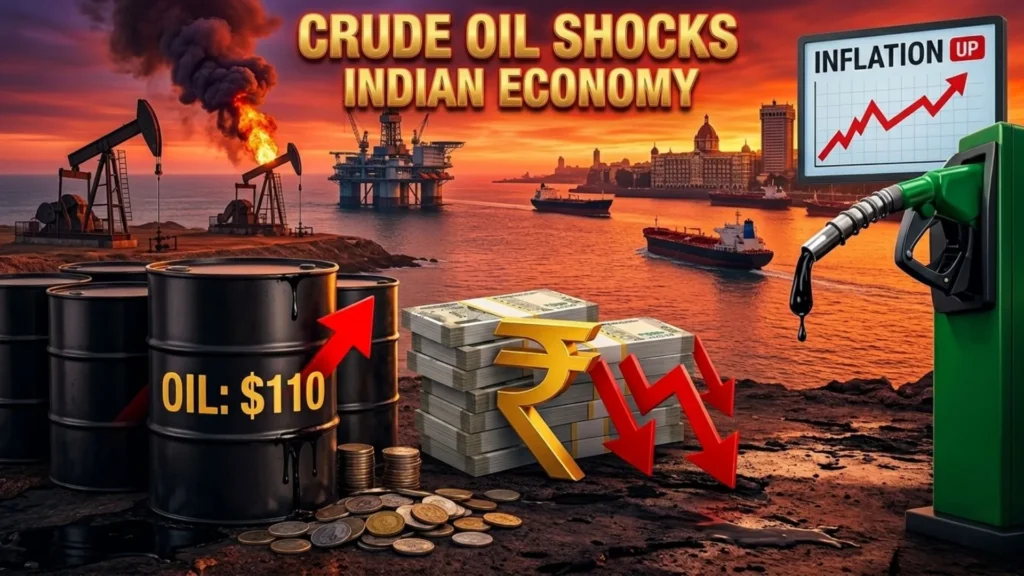
The escalating worldwide crude oil prices are emerging as a vital threat to India’s economic stability. The Hindu analysis demonstrates that high oil prices will result in increased imported inflation which will drive up the current account deficit (CAD) and cause economic disruptions throughout the banking systems financial markets and daily expenses for consumers. The blog presents a comprehensive study of crude oil price effects on the Indian economy through data-based research which explains its significance and demonstrates how it impacts financial systems and various sectors including individuals, businesses and policymakers until 2026 and beyond.
Why Crude Oil Prices Matter for India
India is one of the largest crude oil importers in the world, relying on imports for nearly 85% of its oil needs. This makes the impact of crude oil prices on Indian economy both immediate and significant.
When global oil prices rise:
- Import bills surge
- Currency weakens
- Inflation rises
- Economic growth slows
According to industry estimates, even a $10 per barrel increase in crude prices can raise India’s import bill by $13–14 billion and widen the CAD by 0.3% of GDP .
How Rising Crude Oil Prices Drive Inflation
One of the most direct consequences of rising oil prices is imported inflation. Since crude oil is a key input in transportation, manufacturing, and energy production, higher prices cascade across the economy.
Key Inflation Channels:
Sector | Impact |
Transport | Higher fuel costs increase logistics expenses |
Food | Rising transport costs push up food prices |
Manufacturing | Increased production costs reduce margins |
Household Expenses | LPG, petrol, and diesel prices rise |
Economic data suggests that a 10% increase in crude oil prices can push:
- Wholesale inflation (WPI) up by 80–100 basis points
- Consumer inflation (CPI) up by 20–30 basis points
This demonstrates how deeply the impact of crude oil prices on Indian economy is tied to everyday affordability.
Current Account Deficit (CAD): The Hidden Risk
The CAD represents the gap between a country’s imports and exports. Rising oil prices significantly widen this gap because India spends more on imports without a proportional increase in exports.
Why CAD Matters:
- Weakens the Indian Rupee
- Increases external debt risks
- Reduces foreign investor confidence
Recent projections suggest India’s CAD could rise to 1.2–1.3% of GDP due to elevated oil prices .
A widening CAD is one of the most serious long-term consequences of the impact of crude oil prices on Indian economy, as it directly affects financial stability.
Impact on Banking & Financial Sector
The banking and finance ecosystem is highly sensitive to oil price volatility.
1. Pressure on Monetary Policy
The Reserve Bank of India (RBI) faces a tough balancing act:
- Control inflation (raise interest rates)
- Support growth (lower rates)
Higher oil prices limit the RBI’s ability to cut rates, affecting loans, EMIs, and liquidity.
2. Increased Borrowing Costs
When inflation rises:
- Interest rates increase
- Loan affordability decreases
- Credit growth slows
3. Impact on Corporate Profitability
Industries like aviation, logistics, and FMCG face margin pressure, leading to:
- Lower earnings
- Reduced investment
- Potential job cuts
Thus, the impact of crude oil prices on Indian economy extends directly into financial markets and credit systems.
Real-World Example: Geopolitical Tensions
Global events play a major role in oil price fluctuations. For instance, geopolitical tensions in the Middle East recently pushed crude prices from $64–65 to $74–75 per barrel .
India imports a large share of oil through sensitive routes like the Strait of Hormuz, making it vulnerable to:
- Supply disruptions
- Price shocks
- Trade instability
This highlights how external factors intensify the impact of crude oil prices on Indian economy.
Long-Term Economic Implications
1. Slower GDP Growth
Higher oil prices decrease both personal income and corporate spending which results in decreased economic growth.
2. Fiscal Pressure
The government needs to spend more money on subsidies which include LPG and fuel expenses.
3. Currency Depreciation
The rupee becomes weaker because of increased imports which results in higher costs for all imported goods.
Key Takeaways Table
Economic Indicator | Effect of High Crude Prices |
Inflation | Rises significantly |
CAD | Widens |
Rupee Value | Weakens |
Interest Rates | Likely to increase |
GDP Growth | Slows down |
Benefits of Understanding This Trend
Understanding the impact of crude oil prices on Indian economy helps individuals and businesses make smarter financial decisions:
- Better investment planning during inflation cycles
- Smarter borrowing decisions amid rising interest rates
- Improved business cost forecasting
- Awareness of macroeconomic risks
For investors, this knowledge can guide portfolio allocation toward inflation-resistant assets like commodities or energy stocks.
What Can India Do?
The Indian economy needs three strategic measures to minimize long-term impacts from crude oil price fluctuations. The first measure requires the country to increase its renewable energy usage. The second measure requires the country to obtain oil from multiple sources. The third measure requires the country to enhance its ability to produce energy through domestic resources. The establishment of strategic petroleum reserves functions as the fourth measure. These steps enable India to decrease its exposure to international price volatility.
Final Thoughts
The Indian economy experiences significant effects from crude oil price changes which affect inflation rates and fiscal health and financial market performance. Oil prices will continue to be a major threat to India’s economic development because global uncertainties continue to exist. People and companies and government officials need to keep up with news developments to maintain their financial readiness because it has become a crucial requirement for modern life.
Stay ahead of inflation, interest rate changes, and economic trends.
Join GoFinance today and take control of your financial future with smarter insights and expert guidance.