
- 1.Defining Traditional Banks
- 2.Understanding Neobanks
- 3.Core Differences: Neobanks vs Traditional Banks
- 4.Comparison Table: Neobanks vs Traditional Banks
- 5.Advantages of Traditional Banks
- 6.Drawbacks of Traditional Banks
- 7.Strengths of Neobanks
- 8.Limitations of Neobanks
- 9.Similarities Between Neobanks and Traditional Banks
- 10.The Future: Neobanks vs Traditional Banks Trajectory
- 11.Choosing Between Neobanks vs Traditional Banks
- 12.Real-World Implications for Consumers
- 13.Regulatory and Security Considerations
- 14.Economic Impact: Neobanks vs Traditional Banks
- 15.Conclusion
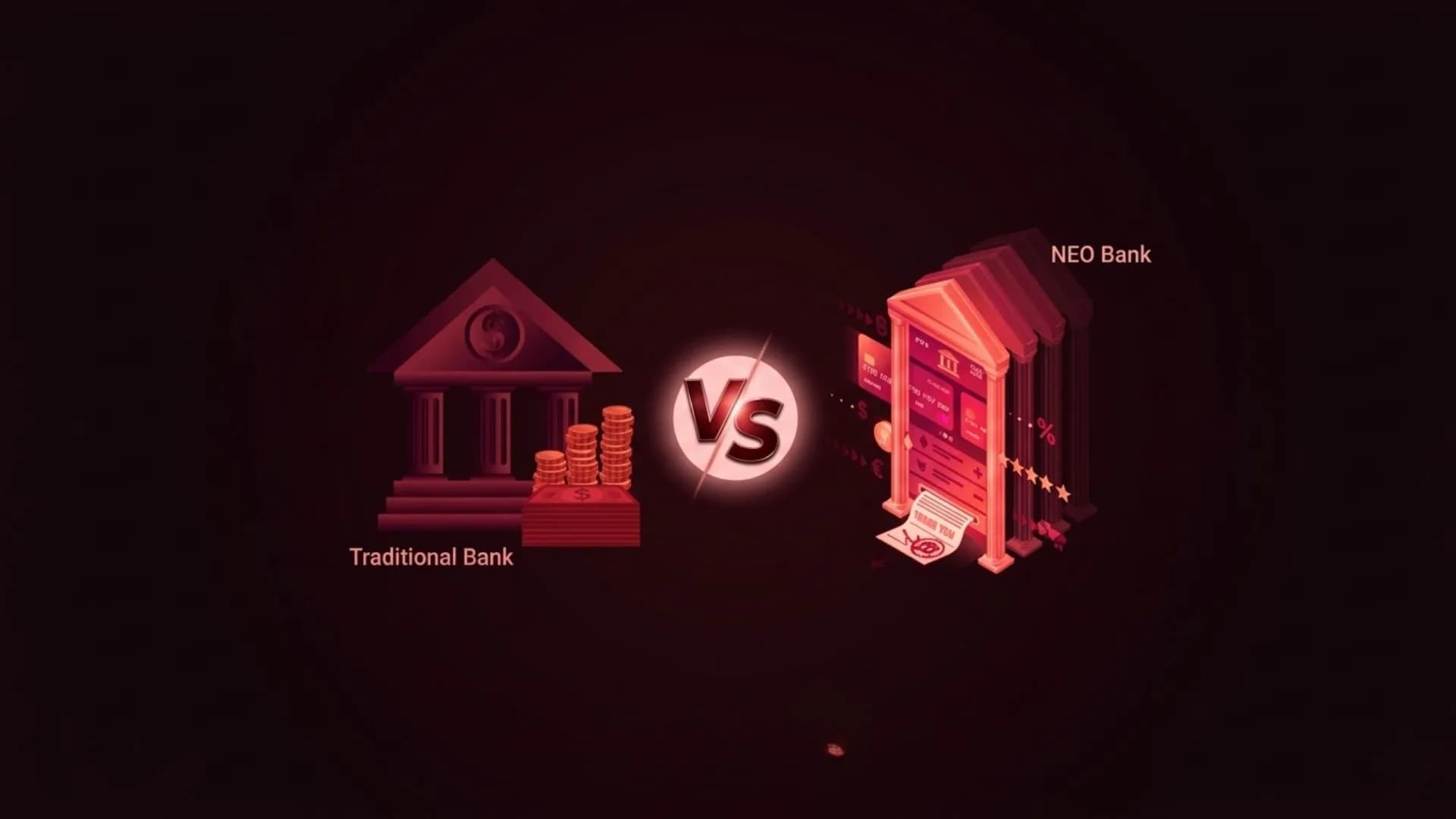
Neobanks vs traditional banks is described as one of the most transformative debates in the present-day finance field, where modern digital platforms are challenging the conventional banking systems. This differentiation matters deeply for those who are handling their personal savings, investments, or enterprise transactions, as it will shape the way we access funds, plan for the future, and also secure loans amid the rapid technological shifts.
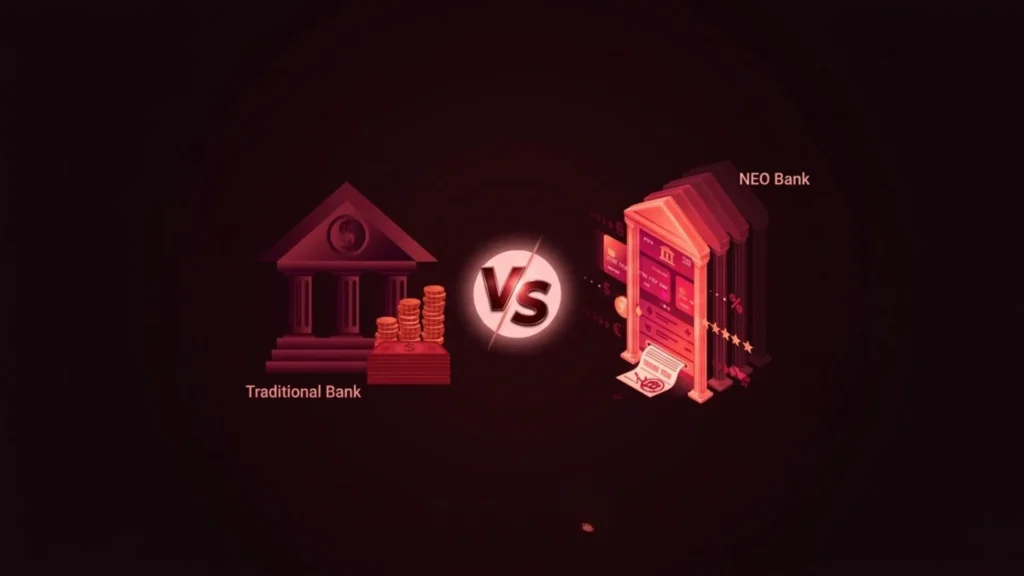
The conventional banks have, for a long time, symbolised stability with their widely spread branch networks and protective measures, while the Neobanks have come into light as agile disruptors that are delivering seamless services through mobile apps without having the weight of physical infrastructure. As customer preferences are consistently changing and evolving around convenience, lower costs, and instant gratification, having an understanding of neobanks vs. traditional banks becomes very important to make informed decisions that adhere to individual lifestyles and financial goals.
This survey is drawn from established industry insights to break down the operations, limitations, strengths, and trajectories that help the readers analyse the options objectively in an era where the banks are no longer restricted to brick-and-mortar locations.
Defining Traditional Banks
Traditional banks support the global economy through a robust physical and digital framework. These banks maintain expensive branch networks, comprehensive online portals, and thousands of ATMs. These are specifically governed by stringent regulations that ensure customer protection and accountability.
These institutions serve everyone from retail clients to large enterprises, providing end-to-end financial solutions backed by deposit insurance schemes.
Understanding Neobanks
Neobank vs. Traditional Banks showcases neobanks as branchless entities operating wholly via application and web interfaces. They specifically collaborate with chartered banks, offering core services like cards, transfers and accounts. This eventually emphasizes user-friendly designs and cost efficiencies.
Popular names like Revolut, Varo, and Starling illustrate their focus on tech-driven accessibility for younger demographics.
Core Differences: Neobanks vs Traditional Banks
The core concept of neobanks vs traditional banks also relies on delivery models like legacy infrastructure vs. cloud-based agility. Where traditional setups prioritize in-person interaction, neobanks excel in personalization and speed.
Noble distinctions often include pricing structure, access method, and product depth. While neobanks streamline basics, traditional banks specialise in handling complex financial issues.
Comparison Table: Neobanks vs Traditional Banks
| Aspect | Traditional Banks | Neobanks |
| Physical Presence | Branches and ATMs nationwide | App-only, no physical locations |
| Fees and Costs | Maintenance and transaction charges | Minimal or no fees |
| Services Offered | Full range: loans, investments, lockers | Core: accounts, payments, basic savings |
| Onboarding Speed | Multi-day with documents | Instant via app verification |
| Customer Support | Phone, branch, email | 24/7 in-app chat and AI bots |
| Regulation | Direct licenses, full deposit insurance | Partnered compliance, insured via banks |
| Innovation Level | Incremental app updates | AI analytics, instant notifications |
Neobank vs. traditional bank dynamics appear clearly in this overview.
Advantages of Traditional Banks
Neobanks vs. Traditional Banks reveals traditional banks' edge in dependability. Clients appreciate expert consultations at branches for decisions like mortgages or estate planning. Nationwide ATM access supports cash-reliant users seamlessly.
Their track record instills confidence during economic turbulence, with diversified services catering to life milestones.
Pros outlined:
- Expert advice for intricate finances
- Broad product portfolios
- Historical resilience in crises
- Secure vaults for valuables
Drawbacks of Traditional Banks
Neobanks vs. Traditional Banks exposes traditional banks' inefficiencies. Elevated fees diminish returns, while clunky interfaces lag behind mobile-first expectations. Mandatory branch visits disrupt schedules in the urban hustle.
Competitive rates often trail market leaders, prolonging paperwork for even simple tasks.
Pain points:
- Overdraft penalties add up
- The app glitches during peak hours
- Bureaucratic loan approvals
Strengths of Neobanks
Neobanks vs. traditional banks position neobanks as cost leaders. Absent overheads enable free accounts and superior interest yields. Biometric onboarding completes in minutes, ideal for global nomads.
Proactive AI flags spending patterns and detects fraud instantly, enhancing control.
Key benefits:
- Granular budgeting tools
- Competitive savings rates
- Paperless, sustainable model
- Tailored financial insights
Limitations of Neobanks
Neobanks vs. traditional banks flag neobanks' constraints. Cash deposits prove cumbersome without branches, frustrating certain users. Product lines remain basic, sidelining advanced lending.
Digital dependency invites service downtimes, and protections hinge on partnerships.
Drawbacks:
- Cash transaction hurdles
- Narrow credit offerings
- Tech outage risks
- Inaccessibility for non-digital natives
Similarities Between Neobanks and Traditional Banks
Neobanks vs. traditional banks share fundamentals: secure accounts, debit cards and wire services. Both employ encryption and monitoring to combat fraud, while apps unify experiences.
They converge on customer-centric goals of reliability and ease.
Common ground:
- Core transactional capabilities
- Multi-factor authentication
- Deposit safety nets
The Future: Neobanks vs Traditional Banks Trajectory
Neobanks vs. traditional banks forecast convergence. Banks integrate neobank features; neobanks pursue full licenses. AI, blockchain, and open banking will redefine personalization by 2030.
Digital adoption could hit 85% in transactions, spurring regulatory adaptations.
Forward trends:
- Seamless app ecosystems
- Voice-activated banking
- ESG-focused products
- Predictive financial coaching
Choosing Between Neobanks vs Traditional Banks
Align choices with priorities. Digital natives favour neobanks for efficiency; complex needs suit traditional breadth. Many opt for a hybrid: neobank daily, traditional for investments.
Evaluate habits like cash frequency or loan requirements.
Factors to consider:
- Tech comfort level
- Service variety needs
- Budget sensitivity
Real-World Implications for Consumers
Neobanks vs. traditional banks reshape habits. Millennials pocket savings via neobanks; families lean on branches. Enterprises mix for optimized cash flow.
Emerging economies accelerate neobank uptake for inclusion.
Insights:
- Users save 25-40% on fees
- Retention blends loyalty programs
Regulatory and Security Considerations
Neobanks vs. traditional banks demand scrutiny. Banks endure audits; neobanks mirror via partners. Investments in biometrics fortify defences against breaches.
Insurance caps deposits uniformly.
Essentials:
- Confirm coverage details
- Scrutinize data policies
- Track licensing progress
Economic Impact: Neobanks vs Traditional Banks
Neobanks vs. traditional banks drive progress. Neobanks lower entry barriers for the underserved; banks sustain lending volumes. Synergy spurs innovation and stability.
Growth metrics show neobanks doubling users annually.
Influences:
- Fintech employment boom
- Valuation surges
- Unbanked population reduction
Conclusion
Neobanks vs traditional banks illustrate a complementary future and not an outright replacement. Traditional banks offer an unmatched scope and scalability, while neobanks focus more on personalization, affordability, speed, and innovation in everyday finance. As a hybrid proliferates, the consumer gains an empowered choice that is specifically aligned with lifestyle. For the forward-thinking people, blending both neobanks and traditional banks leverages a future-proof banking strategy.