
- 1.The Reason Why the Rupee is losing to the Dollar.
- 2.Role of Oil Prices and India’s Import Dependence
- 3.Effect of Foreign Institutional Investor (FII) Flows.
- 4.Central Bank Intervention and Policy Signals
- 5.What a Weaker Rupee Means to the Inflation.
- 6.Impact on Indian Exports and IT Sector
- 7.Impact on Stock Markets and Trends in Investments.
- 8.Implications for Indian Consumers and Businesses
- 9.Is ₹90+ per Dollar a Structural Shift?
- 10.What Lies Ahead for the Rupee?
- 11.Strategic Takeaways for Investors and Policymakers
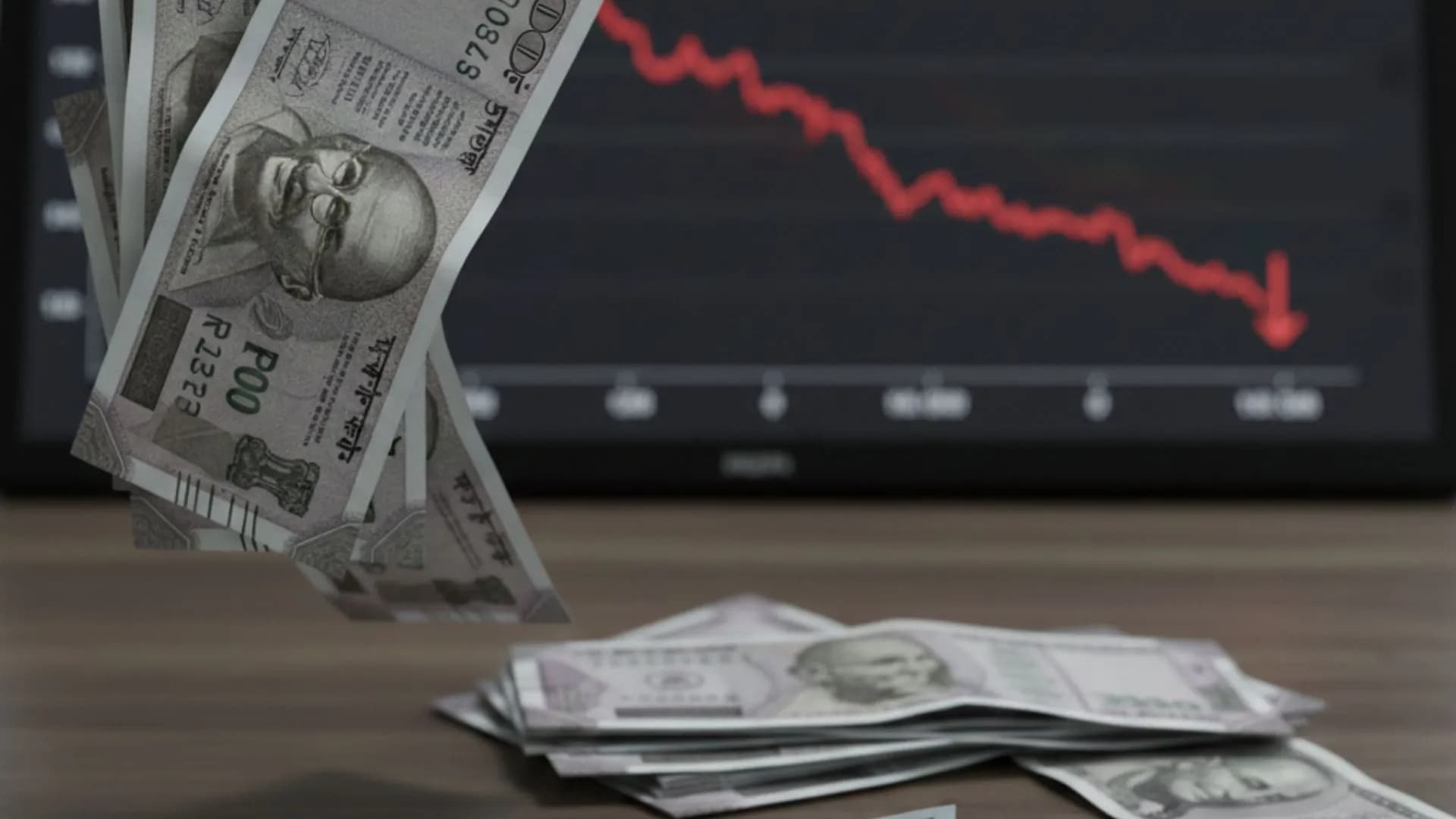
The Indian rupee has fallen under the fire again in the foreign exchange markets and this has been due to a combination of the uncertainty in the global market, the domestic economic factors and the changing monetary policies. A report has shown that the rupee has fallen by 7 paise to 90.96 against US dollar, a trend which has attracted both attention of the investors, policymakers as well as businesses.
This movement can seem as a little trifle, but even minor change in the currency values can have some strong implications on inflation, imports, foreign investments, and ordinary consumers. The explanation of the reasons why a rupee is weakening and the implications it has on the financial ecosystem in India is essential to every one that follows the trend of the economy in 2026.
The Reason Why the Rupee is losing to the Dollar.
There is no one factor that causes the depreciation of the rupee. Rather, it is a meeting of international financial forces and local economic conditions. The power of the US dollar is one of the strongest forces. With the strengthening of the dollar across the world, the emerging currency in the market like the rupee currency weakened.
The financial policy of the Federal Reserve has been one of the key factors that have made the dollar strong. Constant inflation in the United States has caused tightening of financial situations and high interests. An increase in the yields of the US bonds is appealing to global investors, which is causing capital outflow in emerging markets such as India.
Simultaneously, the growing tensions in geopolitics and the uncertainty in global trade have raised the need of safe-haven assets. In the past, when the world is volatile, investments shift into the dollar-based assets exerting a downward pressure on the emerging currencies.
Role of Oil Prices and India’s Import Dependence
The other factor that has affected the direction of the rupee is the dependence of India on imported crude oil. India being one of the largest oil importers in the world is very sensitive to the movements of energy prices in the world. Increased oil prices increase the import bill of India, which leads to high demand of dollars to finance imports.
The resultant effect is the increasing current account deficit which in turn puts strain on the rupee. With the oil prices at a steady level, the long-run demand of the imports has the potential to put the rupee under pressure when the growth of the export rates falls short of it.
Indicatively, higher oil prices have always been accompanied by declining rupee, in historical instances like in the commodity supercycles of the last ten years. The structural pattern remains the same even now.
Effect of Foreign Institutional Investor (FII) Flows.
The foreign institutional investors are pivotal in dictating the short term currency fluctuations. When money moves out of the Indian equity or debt markets by the FIIs, they exchange the rupees into dollars, which dilutes the local currency.
According to the current market dynamics, the extraction of Indian equities has been intermittent because of the booking of profits and international portfolio rebalancing. Even minor changes in investor appetite can affect exchange rates particularly when compounded with bigger global tail winds.
On the other hand, a high FII inflows is likely to strengthen the rupee. In the global rate differentials and uncertainty environment, however, these inflows have been volatile.
Central Bank Intervention and Policy Signals
The reserve bank of India (RBI) plays an important role in currency volatility management. Although the central bank normally lets the exchange rates fluctuate according to the market, it at times interferes to stop over-varying of the exchange rates.
The RBI employs the foreign exchange reserves in a prudent manner where the dollar is sold to stabilize the rupee when it is declining drastically. India has strong forex reserves, which usually exceed $600 billion over the last few years, which cushions against disorderly depreciation.
The RBI however is unlikely to defend a certain level of exchange rate. Rather, it aims at ensuring normal market operation and averting speculative attacks. This restrained stance indicates the shift of India towards more flexible exchange rate regime.
What a Weaker Rupee Means to the Inflation.
Imported inflation is one of the most short-term effects of depreciation of the rupee. Owing to the fact that most commodities such as crude oil, electronic and fertilizers are priced in dollars, a weak rupee increases the cost of imports.
When the prices of imports are high then the cost of production by the businesses will be high. Such expenses are often imposed on the consumers, which adds to the general inflation pressures.
An example of this is in the case of sectors like aviation, automobiles, and consumer electronics that are very sensitive to the fluctuations in currency. The depreciated rupee may increase air tickets, the price of devices and the price of fuel and all these directly impact the household budgets.
Impact on Indian Exports and IT Sector
Although lowering of the rupee increases the cost of imports, it comes with a few benefits particularly in the export oriented industries. Indian exporters are paid in dollars and hence when the rupee is weakening, their revenues will rise when converted back to local currency.
Such a dynamic is favorable to IT services industry, pharmaceutical and textile industries. And the IT sector especially has better chances of achieving better margins with weakening rupee since most of their revenues and few cost are dollar priced whereas much of their costs are in rupees.
Nevertheless, the benefit cannot be so obvious. The export boost could be restricted in case the global demand is falling at the same time as it is experienced during economic downturns.
Impact on Stock Markets and Trends in Investments.
The depreciation of currencies usually determines the stock market. Such export-intensive industries would perform better when the rupee is weak, and industries that are import intensive can experience head wind.
Banking and financial stocks may also respond to currency trends, especially when depreciation is a currency driver of inflation, and changes expectations of interest rates. Inflation might also lead to tightening of monetary policy, which has impacts on the cost of borrowing and credit development.
Also, foreign investment decisions are subject to currency volatility. Weak rupee dilutes returns of foreign investors as their profits are converted back to dollars and this may discourage inflows in the short term.
Implications for Indian Consumers and Businesses
For the average Indian consumer, the effects of rupee depreciation may not be immediately obvious but are deeply embedded in everyday life. Imported goods—from smartphones to luxury products—become more expensive. Overseas travel costs rise due to higher dollar conversion rates. Education abroad also becomes costlier for students and families.
Businesses with global supply chains face margin pressures, particularly those dependent on imported raw materials. On the other hand, companies with strong export exposure may see improved profitability.
Small and medium enterprises (SMEs) often feel the impact more acutely because they have limited hedging capabilities against currency fluctuations.
Is ₹90+ per Dollar a Structural Shift?
The rupee passing the psychological thresholds, like 90 to 1 dollar, is also a subject of controversy concerning the currency trends in the long run. Other economists take this as a process of structural depreciation in gradual steps that are consistent with inflation differentials between India and the developed economies.
Third world currencies tend to weaken with time because of increased domestic inflation rates as opposed to the developed countries. Gradual weakening of the rupee in such a situation is not in itself desperate as long as this is done in an orderly manner and backed by good economic fundamentals.
The strong growth prospects of India, the growing digital economy and investments in infrastructure still make a long term support to the currency.
What Lies Ahead for the Rupee?
The short-term performance of the rupee will probably be determined by three key variables, including global interest rates, prices of crude oil, and capital flows. Once the US inflation levels go down and the Federal Reserve becomes more dovish, there is a possibility of highlighting the emerging market currencies.
Domestically, a robust growth in the GDP and the tamed inflation would serve in stabilizing investor confidence. The stability will also be stabilized through continued forex reserve strength and sound monetary policy.
Nevertheless, geopolitical conflicts or the abrupt capital outflow might cause the volatility bouts due to external shocks.
Strategic Takeaways for Investors and Policymakers
Currency movements are a key macroeconomic indicator and should be closely tracked by investors, businesses, and policymakers. For investors, diversification across sectors and geographies can mitigate currency-related risks. Export-oriented stocks may provide natural hedges during periods of rupee weakness.
For policymakers, maintaining macroeconomic stability remains critical. Managing inflation, sustaining growth momentum, and ensuring strong forex reserves will help cushion against global shocks.
From a broader perspective, the rupee’s trajectory reflects India’s integration into the global economy. While short-term fluctuations are inevitable, long-term stability will depend on structural reforms, export competitiveness, and capital inflows.
Final Thoughts
The rupee’s fall to ₹90.96 against the US dollar, as reported by The Hindu, highlights the complex interplay between global financial conditions and domestic economic fundamentals. While the depreciation raises concerns around inflation and imports, it also presents opportunities for exporters and certain sectors.
For readers and investors, the key takeaway is to view currency movements not as isolated events but as part of broader macroeconomic trends. Understanding the forces shaping the rupee can offer valuable insights into India’s economic trajectory and help individuals make informed financial decisions in an increasingly interconnected world.
As global markets evolve and India continues its growth journey, the rupee will remain a crucial barometer of economic resilience, policy effectiveness, and investor confidence.