
- 1.What Is a Credit Score?
- 2.Why Credit Score Matters for Business Loan Approval?
- 3.How a Good Credit Score Benefits You?
- 4.What Credit Score Do Lenders Prefer?
- 5.Other Credit Factors Lenders Review
- 6.Credit Score Is Important, But Not the Only Factor
- 7.Common Credit Score Mistakes to Avoid
- 8.Final Thoughts
- 9.
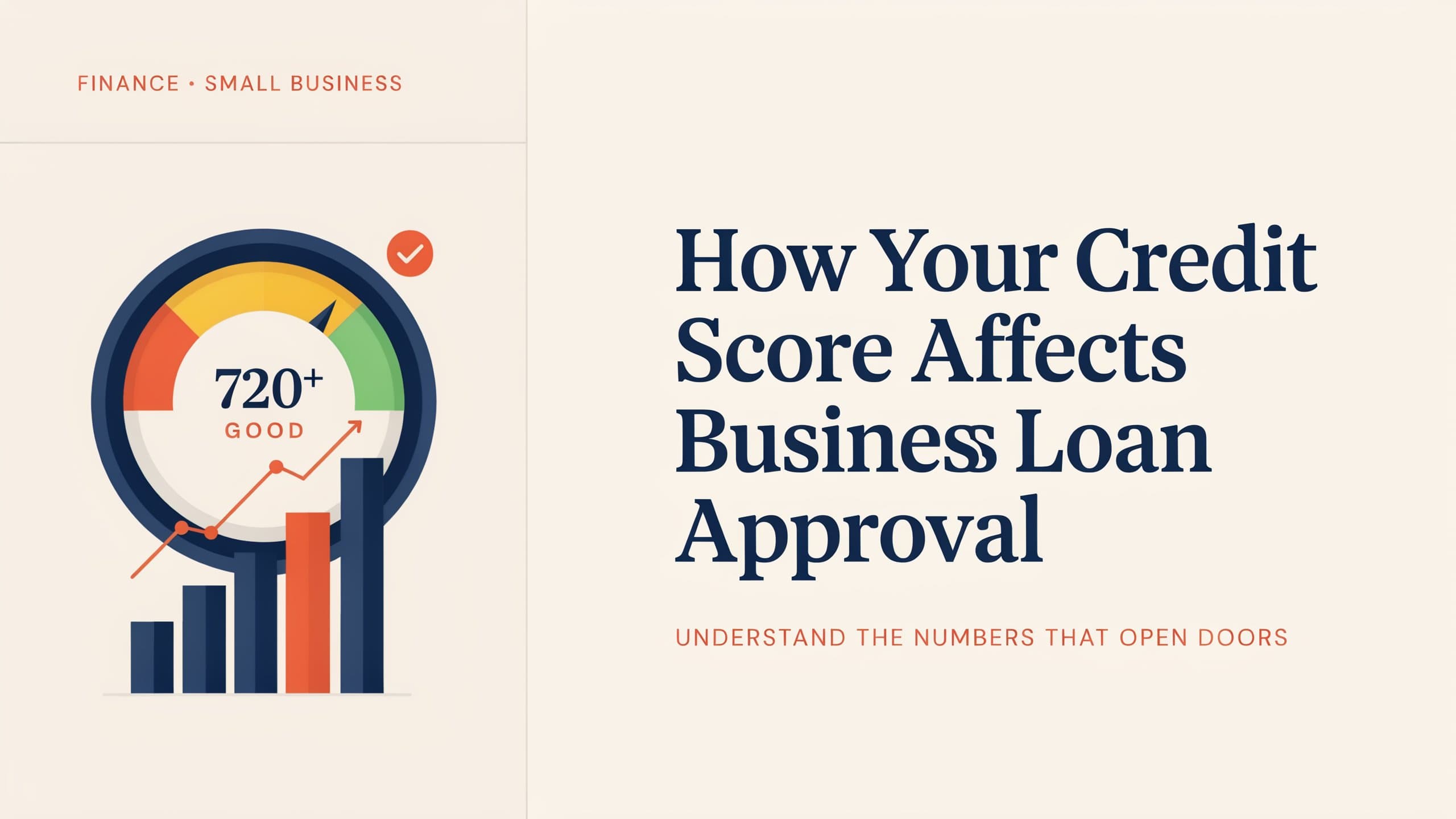
The credit profile will often be one of the first things a lender will look at when considering your application for a Business Loan. Although other elements like business turnover, profitability, and cash flow are taken into consideration, the first indicator of a company's financial responsibility comes in the form of a credit score. A high credit score is able to not only increase a company's likelihood of Business Loan Approval but is also capable of enabling a firm to borrow a greater sum at competitive rates of interest.
Conversely, a low credit rating may prompt more rigorous loan terms or a failed application altogether. Let's review how credit scores impact the outcome of applications for Business Loans, and steps that can be taken to improve a firm's credit rating ahead of application
What Is a Credit Score?
A credit score is a 3-digit number, which reflects your credit worthiness based on your borrowing and repayment record. Lenders in India may refer to Credit Reports such as Trans Union CIBIL when granting a loan.
For Companies, besides the Company's Credit Report (CCR) and CIBIL Rank, the lenders check the borrower’s profile too. Instead of the repayment patterns, usage of the credit, dues outstanding and the pattern of borrowing.
Why Credit Score Matters for Business Loan Approval?
A credit score helps lenders estimate the likelihood that a borrower will repay the loan on time.
During the Business Loan Approval process, lenders use your credit profile to assess:
- Repayment history
- Existing loan obligations
- Credit utilization
- Previous loan defaults
- Number of recent loan enquiries
A healthy credit profile signals responsible borrowing behavior and reduces the lender's perceived risk.
How a Good Credit Score Benefits You?
A strong credit score offers several advantages.
Higher Approval Chances
Applicants with a good repayment history are generally viewed as lower-risk borrowers, increasing the likelihood of Business Loan Approval. According to TransUnion CIBIL, higher credit scores improve approval rates for loan applications.
Better Interest Rates
Businesses with stronger credit profiles may qualify for more competitive interest rates because lenders perceive them as financially reliable.
Higher Loan Amounts
Lenders are often more comfortable extending larger loan amounts to borrowers with a consistent record of responsible credit management.
Faster Processing
Applications supported by strong credit histories may require fewer additional checks, helping speed up the approval process.
What Credit Score Do Lenders Prefer?
There is no universal minimum score because every lender has its own lending policy.
However, lenders generally prefer applicants who demonstrate:
- Consistent repayment history
- Low credit utilization
- No recent defaults
- Stable borrowing behavior
Rather than focusing only on the score itself, lenders also examine your overall credit report and financial conduct.
Other Credit Factors Lenders Review
Your score is only one part of the evaluation.
Repayment History
Paying EMIs and credit card bills on time is one of the strongest indicators of financial discipline.
Credit Utilization
Using a very high percentage of your available credit limit may indicate financial stress.
Existing Debt
Lenders evaluate your outstanding loans to determine whether you can comfortably manage another EMI.
Recent Credit Enquiries
Applying for several loans within a short period may signal urgent borrowing needs and can influence lending decisions.
How to Improve Your Credit Score Before Applying
If your credit profile needs improvement, consider these practical steps.
Pay All EMIs on Time
Timely repayment remains the most effective way to strengthen your credit profile.
Reduce Outstanding Debt
Lowering existing loan balances and credit card dues improves your overall financial position.
Maintain Low Credit Utilization
Avoid using your entire available credit limit whenever possible.
Check Your Credit Report
Review your credit report regularly and report any inaccuracies to the credit bureau.
Avoid Multiple Loan Applications
Submitting several applications in a short period can increase the number of credit enquiries and may negatively affect lender perception.
Does a Low Credit Score Mean Loan Rejection?
Not necessarily.
Some lenders may still approve loans for applicants with lower credit scores by considering additional factors such as:
- Business turnover
- Cash flow
- Profitability
- Business vintage
- Collateral (for secured loans)
However, lower credit scores may result in:
- Higher interest rates
- Lower loan amounts
- Additional documentation requirements
- Stricter eligibility conditions
Every lender follows its own risk assessment process.
Credit Score Is Important, But Not the Only Factor
Even applicants with excellent credit scores can face delays if:
- Financial statements are incomplete
- Business cash flow is weak
- Documentation is missing
- Existing debt is excessive
Similarly, businesses with average credit scores but strong financial performance may still secure financing if they meet other eligibility requirements.
Successful Business Loan Approval depends on your complete financial profile rather than one factor alone.
Common Credit Score Mistakes to Avoid
Many borrowers unintentionally weaken their credit profile by:
- Missing EMI due dates
- Paying only minimum credit card amounts
- Applying for multiple loans simultaneously
- Ignoring errors in credit reports
- Frequently exhausting credit card limits
Avoiding these habits can improve your borrowing profile over time.
Final Thoughts
Business Loan approval does consider business credit score, but together with the business's cash flow and stability, turnover and balance sheet performance and so on. Good history of payments with lenders, balanced finances (low liability ratio), and credit reports’ periodical revision. Taking care of these aspects increases both approval potential and interest terms from potential business financing providers.
If your company is thinking of funding via commercial loans, Go Finance business funding provides tailored options considering all your financial information. With a simple application process and access to multiple lending solutions, they make it easier to find business funding that matches your needs while helping you move one step closer to successful Business Loan Approval.
Frequently Asked Questions
1. 1. Does my personal credit score affect a business loan?
Quite a few of the lenders check the promoter’s personal credit score and it usually applies for all businesses, MSMEs, sole-props and unsecured business loans.
2. Q2.Can I get a business loan on a low credit score?
Yes, some of the lenders do provide it. But you might be provided a lesser amount, and/or may have to pay higher interest.
3. Q3.What do I do to improve my credit score before taking out an application?
Pay loans/EMIs on time, control your current outstanding debts and limit card utilization. Never apply for so many loans simultaneously; do give some interval between applications.
4. Q4.Is it solely credit score based for business loan eligibility?
Not necessarily. Banks will verify aspects like business revenue and its lucrativeness, existing debt load, cash circulation from business, authenticity of all documents prior to deciding whether to provide the business loan or not.
5. Q5.How frequently should I get my credit report evaluated?
Checking your credit report two to four times in a year at a frequency of a half-yearly or full-yearly may go a long way. Not only will this assist in sorting out issues on your profile.
Go Finance
Go Finance made getting a loan very simple and fast! Their clear process and helpful team helped me get money for my dream without any problems. I highly recommend Go Finance to anyone who needs a quick and easy loan.