
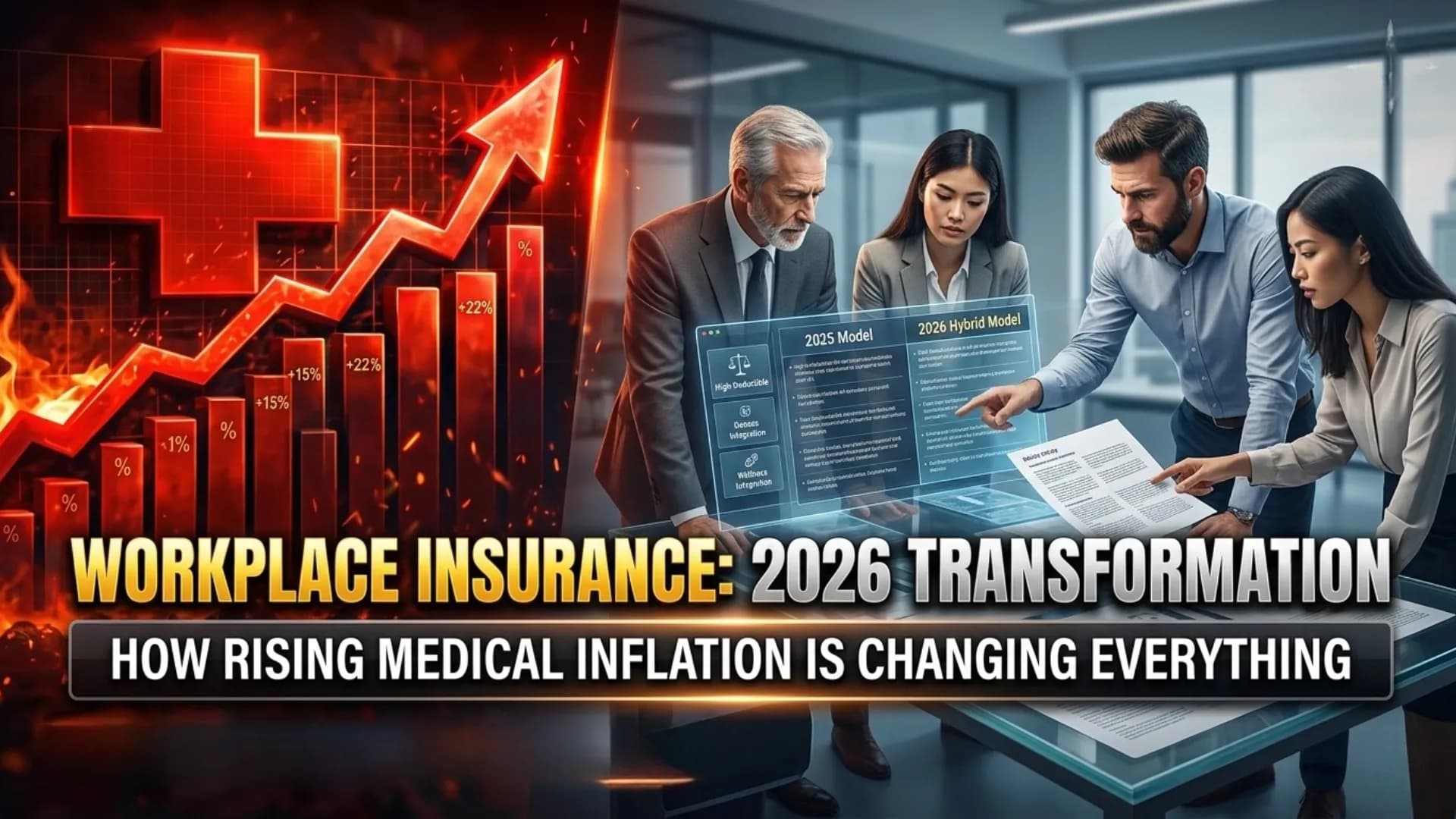
- 1.Medical Inflation Is Outpacing Wage Growth
- 2.The Shift From Traditional Insurance to Smarter Risk Models
- 3.Preventive Healthcare Is Centralizing.
- 4.Cost Sharing Models Are Becoming More Common
- 5.Customised and Flexible Benefits Are Rising
- 6.The Role of Technology in Workplace Insurance
- 7.Effect on Financial Planning of the Household.
- 8.What This Means for the Future of Employee Benefits
- 9.Why Medical Inflation Is Now a Strategic Business Risk
Medical inflation is no longer a healthcare issue, and it has become a significant financial and job problem that is changing the way employers formulate insurance benefits. As per the information posted in one of the reports by CNBC-TV18 and analysis conducted by Marsh McLennan, the skyrocketing healthcare expenditure is compelling firms to redefine the group insurance set-ups, and benefit plans and long-term employee wellbeing policies.
Its effect is felt way beyond the corporate boardrooms. Workplace insurance is also shifting as one of the factors affecting how families obtain medical care, the organization of premiums, and financial planning at the individual income levels.
Medical Inflation Is Outpacing Wage Growth
The cost of healthcare in the world and especially in the emerging economies has been increasing at a rate that is higher than the general inflation. Incorporating the advanced medical technologies, a rise in hospital charges, the prevalence of chronic diseases and the growing use of healthcare services, employer-sponsored health plans are increasing costs in some regions at the rate of double-digits per year.
Medical inflation has been quite high compared to consumer inflation in India over the years. The resulting cost burden is compelling organisations to pay greater premiums or transfer some of the burden to the employees. This has a trickle down effect and impacts the salary involved, compensation policy as well as benefits design.
To the working families, this can be translated to increased payroll contributions, reduced coverage coverage or more organized co-payment plans.
The Shift From Traditional Insurance to Smarter Risk Models
Previous insurance models at the workplace were not complicated, with employers paying a fixed amount of money to have a wide cover. That is a model that is changing fast. Insurance frameworks are shifting towards risk-managed and data-driven insurance models by companies.
According to these new models, they use analytics to determine the health trends among the workforce and modify policies based on the trends. As an example, organisations are evaluating claims data to know the prevalence of lifestyle diseases like diabetes and hypertension. Using this, they are customising benefits which highlight preventive care instead of a reactive hospitalisation cover.
Such a shift is a new expression of essential change: insurance is ceasing to be a simple safety net in the financial context and has become an instrument of strategic health management.
Preventive Healthcare Is Centralizing.
The increase in the emphasis on preventive healthcare is one of the most noticeable shifts within the employer health policies. Incorporating wellness programs, health screening, mental and health support, and chronic disease management programs are gaining a niche in the insurance packages of corporations.
The reason why employers are investing in these programs is that prevention will minimize claims in the long term. Using the case of cardiovascular risks, prevention of costly hospital interventions can be achieved by timely identification of risks. Mental health support programs are also becoming more popular and it is an indication of the post-pandemic awareness about emotional wellbeing and its relationship with productivity.
To people, this implies that insurance is slowly broadening past the coverage of hospitalisation to proactive health management services.
Cost Sharing Models Are Becoming More Common
To manage rising premiums, many companies are introducing cost-sharing mechanisms. This may include co-payments, deductibles, tiered coverage options, or flexible benefits structures where employees choose coverage levels based on their needs.
While such models help companies control costs, they also encourage individuals to make more conscious healthcare decisions. However, it can also increase out-of-pocket spending, especially for those requiring frequent medical care.
In practical terms, this shift is prompting more people to consider supplemental health insurance policies outside employer coverage.
Customised and Flexible Benefits Are Rising
Another major trend is the move toward flexible benefits platforms. Instead of offering one-size-fits-all plans, companies are allowing employees to customise their coverage.
These flexible plans may include options like:
- Higher maternity benefits
- Expanded parental coverage
- Critical illness riders
- International treatment options
- Mental health and therapy sessions
This approach reflects changing workforce demographics, including younger employees prioritising wellness and older workers needing chronic disease support.
Such flexibility allows households to align healthcare protection with life stage needs, but it also requires greater awareness and financial planning.
The Role of Technology in Workplace Insurance
Technology is becoming a major issue in changing insurance delivery. Digital health platforms, telemedicine, AIs used to evaluate risks, and wellness programs based on wearables are becoming prevalent in corporate healthcare systems.
Teleconsultations, especially have also decreased minor healthcare expenditures and enhanced accessibility, particularly in small urban locations and distant areas. The artificial intelligence systems are assisting the insurers in making more precise predictions based on how claims occurrences and how the premium designs.
Such technological changes are rendering healthcare situation more approachable and data-driven, which can affect the underwriting patterns and insurability in the future.
Effect on Financial Planning of the Household.
The financial implications of the change of insurance models within a workplace are bigger. With employers moving into shared-cost setups, people are increasingly expecting to be personally responsible concerning the management of their own health risks.
This is causing a number of behavioural changes:
- Increasing numbers of households are considering standalone health insurance policies as an insurance to supplement the employer cover.
- Health insurance coverage limits are being increased by financial planners as a result of the high medical inflation.
- Not only income disruptions but also healthcare contingencies are becoming a consideration in emergency funds.
Healthcare is slowly turning out to be an important component of retirement savings alongside education savings as part of personal financial planning.
What This Means for the Future of Employee Benefits
Looking ahead, workplace insurance is expected to evolve into a hybrid model combining insurance, wellness, and financial planning tools. Companies are likely to integrate health benefits with broader employee value propositions, including flexible work policies, mental health initiatives, and financial wellbeing programs.
Global trends indicate a move toward outcome-based insurance models, where insurers reward healthier behaviour through lower premiums or enhanced benefits. This could include incentives for fitness tracking, preventive screenings, or lifestyle improvements.
Such models are expected to become more prevalent as insurers seek sustainable ways to manage rising healthcare costs.
Why Medical Inflation Is Now a Strategic Business Risk
Medical inflation has ceased to be an HR concern, but it is emerging as a strategic business risk. Increasing insurance premiums have a direct effect on profitability, retention of talent and satisfaction of employees.
Those organisations which do not keep up with the times might experience increased rates of attrition, as full healthcare benefits are becoming a crucial element of job value. High-quality healthcare coverage could be an important point of distinction in competitive talent markets.
To the employees and families, this implies that healthcare benefits will remain a key factor in the choice of employment and long-term economic stability.
The Bottom Line
Medical inflation and changing healthcare dynamics are the real causes of the reshaping of the workplace insurance models. Firms are shifting towards more intelligent, information-oriented, and preventive insurance models that balance the cost-reduction measures with the well-being of the employees.
As much as this effort to make the insurance eco-systems sustainable, such changes are also an indication of a new reality: healthcare costs are becoming more shared and harder to navigate.
In the case of households, it is necessary to be informed of the changing trends of work insurance. The knowledge of the coverage structures, the investigation of the supplemental protection, and the focus on preventive health are becoming the steps toward adjustment in the new era of healthcare financing.
Grow your business at Go Finance- get quick and easy finance and business loans that are focused on your expansion. We provide all types of finance and loan solutions with easy approval and reliable support.